
A garage door opener is something you use constantly without thinking about it. Over time, you start noticing the difference between a good system and a frustrating one.
Some units shake the ceiling and rattle the walls. Others operate so smoothly you barely think about them.
The challenge is that homeowners don’t really know what separates the best garage door opener from a mediocre one. Terms like belt drive, chain drive, jackshaft, DC motor, rolling code security, smart access, and battery backup all start sounding interchangeable after a while.
And honestly, many product pages don’t make things any easier.
In this guide, we break everything down in simple terms, so you can choose the best garage door opener for your home.
Types of Garage Door Openers: Which Drive Is Right for You?
Before comparing brands, smart features, or horsepower ratings, homeowners should first decide which type of drive system is best suited to their garage.
The best garage door opener for one home may not work as well for another. A detached garage has different needs than a garage directly below a bedroom. Heavier doors may also require a more powerful garage door opener setup than standard single doors. Understanding the differences between drive systems makes the buying process much easier.
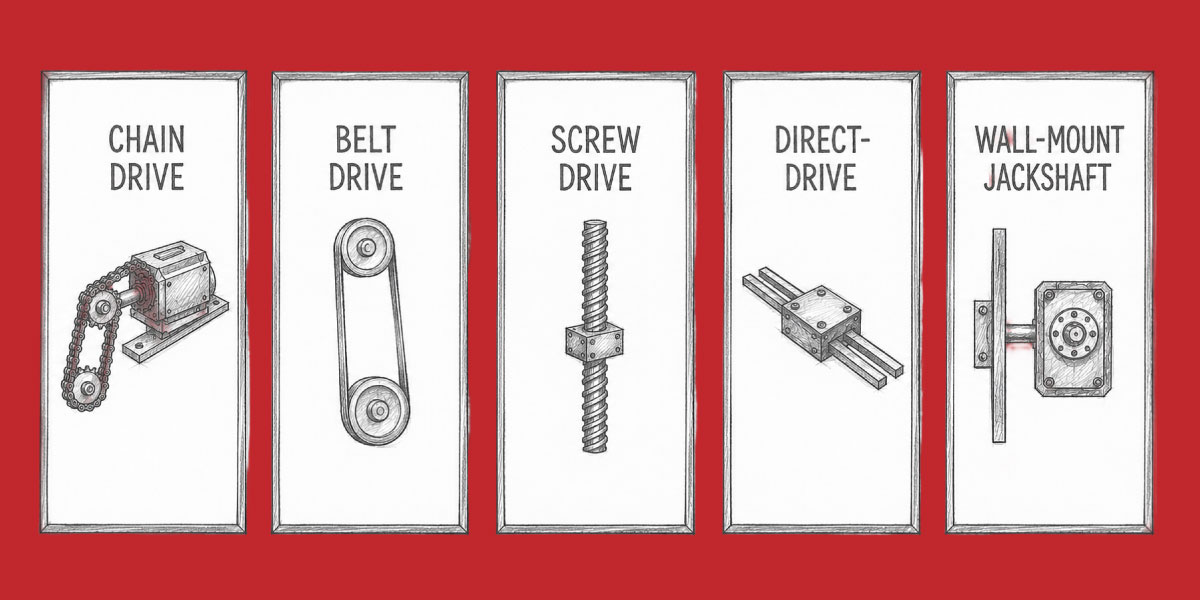
Belt Drive Openers
Belt drive models are considered among the best residential garage door openers for homes with living spaces near the garage. Instead of a metal chain, they use a reinforced rubber belt to move the door along the track. The belt absorbs vibration and reduces mechanical noise significantly.
Chain Drive Openers
Chain drive systems are durable and affordable. They use a metal chain to lift the door and have been the industry’s workhorses for decades.
The tradeoff is noise. Chains create more vibration and rattling compared to belt systems. While this is not a problem in a detached garage, you’ll definitely hear it in an attached one.
Screw Drive Openers
Screw drive openers operate on a threaded steel rod that rotates to move the door.
With fewer moving parts than chain or belt systems, they generally require less ongoing adjustment. In steady, moderate climates, they perform reliably and offer solid lifting power.
However, extreme heat or cold can affect how smoothly the mechanism operates. They’re a better fit for areas with consistent temperatures rather than places with harsh seasonal swings.
Wall-Mount/Jackshaft Openers
Wall-mount, or jackshaft, openers mount beside the garage door to give you free overhead space. They’re suitable for garages with high ceilings, storage racks, car lifts, or limited headroom.Because they operate directly off the torsion system, they’re usually viewed as the best garage door opener for large doors or specialty configurations. These systems operate directly from the torsion bar and handle heavier setups smoothly.
Get Custom Door Pricing
Key Features to Look for in the Best Residential Garage Door Openers
If you’re wondering which garage door opener is best for a quiet attached garage or how to choose a reliable garage door opener, look at how the system performs day after day.
The difference between a system you forget about and one that frustrates you usually boils down to these details.
Motor Horsepower (HP)
The motor strength has to match the weight and size of your garage door.
For standard single residential doors, a ½ HP motor is typically sufficient. However, ¾ HP to 1+ HP is a better choice for heavier insulated doors, double-car garages, or oversized setups.
A powerful garage door opener with too little horsepower will wear down faster, run hotter, and fail earlier than it should. Matching motor strength to door weight protects your investment.
Smart Home Integration
Wi-Fi connectivity has become one of the most requested features in the best residential garage door openers.
With smartphone access, you can open or close the door remotely, check its status, and receive alerts if it’s left ajar. Look for compatibility with systems like myQ (Chamberlain or LiftMaster), Amazon Alexa, or Google Home.
Battery Backup
If you live in an area prone to power outages, battery backup is extremely valuable. It allows full operation even when electricity is out. Many premium residential garage door openers now include this feature as standard.
Safety and Security Features
Security technology has improved significantly over the years.
Auto-reverse sensors detect obstructions and protect children, pets, and vehicles. If your sensors are acting up, check out our garage door sensor troubleshooting guide for quick fixes before assuming you need a new unit.
Some systems even offer camera integration for real-time monitoring.
Noise Level and Vibration Isolation
Even the best residential garage door openers can become frustrating if they shake the entire structure.
Look for models with soft-start and soft-stop technology. These features reduce sudden jerking motions and extend motor life. Vibration isolation hardware also minimizes sound transfer into the home, which is particularly important for attached garages.
Best Garage Door Opener for Large Doors: What You Need to Know
Most buying guides assume you have a standard steel door. If you’ve got a double-wide, insulated, wood, or extra-tall door, you’re in a different category.
The best garage door opener for large doors needs more lifting strength, a sturdier rail, and a drive system designed to handle heavy cycles without struggling. If you buy a powerful garage door opener that isn’t sized for your door, it may work at first, then start slowing down, straining, or stopping short months later.
Why Standard Openers Fail on Garage Doors
Oversized doors weigh a lot more than standard doors, especially insulated and wood models. An underpowered opener must fight this weight every cycle, which overheats the motor, increases wear on moving parts, and can even speed up spring fatigue. In some cases, the door won’t fully open under load.
Minimum HP Requirements for Large Doors
Use these baselines: double-insulated doors need ¾ HP minimum. Custom wood or extra-tall 9–10 ft doors do better with 1 HP or higher. RV-height or commercial-style residential doors typically need 1.25–1.5 HP paired with a heavy-duty rail.
Best Drive Type for Heavy Doors
Belt drive and wall-mount (jackshaft) openers handle heavy loads smoothly with less noise. Chain drives are durable for heavy doors, too, but they add noticeable vibration and sound. Whatever you choose, confirm the opener’s listed weight capacity before purchasing.
Start Your Free Design
Top Garage Door Opener Brands Compared
When homeowners ask, what’s the best garage door opener, they’re usually expecting a simple winner. In reality, the best residential garage door openers depend on how you plan to use them.
Brand choice is less about rankings and more about fit. If your goal is a reliable garage door opener for your budget, garage layout, and usage habits, it helps to understand what each brand does well instead of chasing whatever model is trending.
Here’s how the major names stack up.
LiftMaster
LiftMaster is widely preferred for professional installations and heavier residential setups. It’s known for powerful garage door opener options made for long-term durability.
Considered one of the strongest in the industry, LiftMaster’s myQ smart platform offers remote monitoring, real-time alerts, and delivery integration features. The brand tends to lean toward premium performance and security.
Chamberlain
Many of Chamberlain’s belt drive models are popular with homeowners who have attached garages and want a quieter operation. It’s widely available at major home improvement retailers and is a common, accessible choice for residential upgrades.
Genie
Genie has established a reputation for reliable performance across a range of climates. It offers solid mid-range options with Aladdin Connect smart technology for remote access.
For homeowners who want dependable function without paying premium pricing, Genie remains a strong contender.
Craftsman
Craftsman remains a practical option for budget-conscious buyers. Its entry-level to mid-range models are widely available and compatible with many existing systems. They’re often a practical solution for replacing an older opener without needing major electrical or system changes.
Garage Door Opener Compatibility: Matching the Opener to Your Door
You can buy the best residential garage door openers on the market and still end up disappointed if the system isn’t matched correctly to your door.
A reliable garage door opener depends just as much on the door it’s lifting as the motor powering it.
Before installing any opener, run through this quick checklist:
- Measure Door Height: Standard doors are 7 or 8 feet. Taller doors require extended rail kits.
- Confirm Door Weight and Material: Steel, wood, insulated, and composite doors carry different load requirements.
- Check Spring Condition: Worn or broken springs force the opener to overcompensate.
- Verify Headroom Clearance: Less than 15 inches may require a wall-mount opener.
- Confirm Voltage: Most residential systems run on 120V AC.
Pro Tip: Always have your door professionally balanced before installing a new opener. An unbalanced door will burn out any motor faster than you think.If you’re unsure, schedule a professional opener inspection to avoid premature motor wear.
When to Repair vs. Replace Your Garage Door Opener
Before shopping for the best garage door opener, decide whether you need one. Sometimes a quick fix restores a reliable garage door opener without the cost of full replacement.
Replace if:
- The opener is 10–15+ years old, and repairs cost more than half of a new unit.
- The motor runs, but the door moves inconsistently or struggles under load.
- You want modern upgrades like smart access or battery backup that older units lack.
Repair if:
- The problem is a remote issue, a misaligned sensor, or a stripped gear.
- The unit is fairly new and under warranty.
- A technician confirms the motor and logic board are still functional.
For urgent breakdowns, consider emergency garage door opener repair before committing to replacement.
When repairs approach replacement cost, upgrading to a modern, reliable garage door opener usually makes more sense.
Request a Free Estimate
Choose Smart Now, Avoid Headaches Later
The best garage door opener is not just the most popular model on the shelf. It’s the one correctly matched to your door’s weight, your garage layout, and how you use it every day. A reliable garage door opener, installed professionally and sized properly, provides better security and long-term value.
Don’t wait until an aging system fails at the worst possible moment.
Ready to upgrade to the best residential garage door openers for your home? Thompson Garage Doors carries top-rated openers and provides expert installation tailored to your garage door’s exact specifications. Contact us today for a free recommendation and quote.
FAQs About Choosing the Best Garage Door Opener
Do I need a professional to install a new opener?
Professional installation is strongly recommended, especially for heavy doors or systems with smart home integration. Proper setup, calibration, and safety adjustments protect the motor, extend its lifespan, and help avoid costly mistakes.
How long does a reliable garage door opener last?
A reliable garage door opener generally lasts 10–15 years with regular maintenance. Lifespan depends on door weight, usage frequency, climate, and whether the opener is properly matched to the door’s size and balance.
What’s the best garage door opener for large doors?
Large or insulated double doors typically require ¾ HP to 1+ HP motors with a heavy-duty rail system. LiftMaster’s professional-grade models are frequently recommended for heavy residential doors because they deliver consistent lifting strength and durability.
Which garage door opener is best for a quiet attached garage?
For attached garages, a belt drive model from Chamberlain or LiftMaster is widely considered the best residential garage door opener option. Look for soft-start and soft-stop technology to reduce vibration and minimize sound transfer into nearby rooms.