

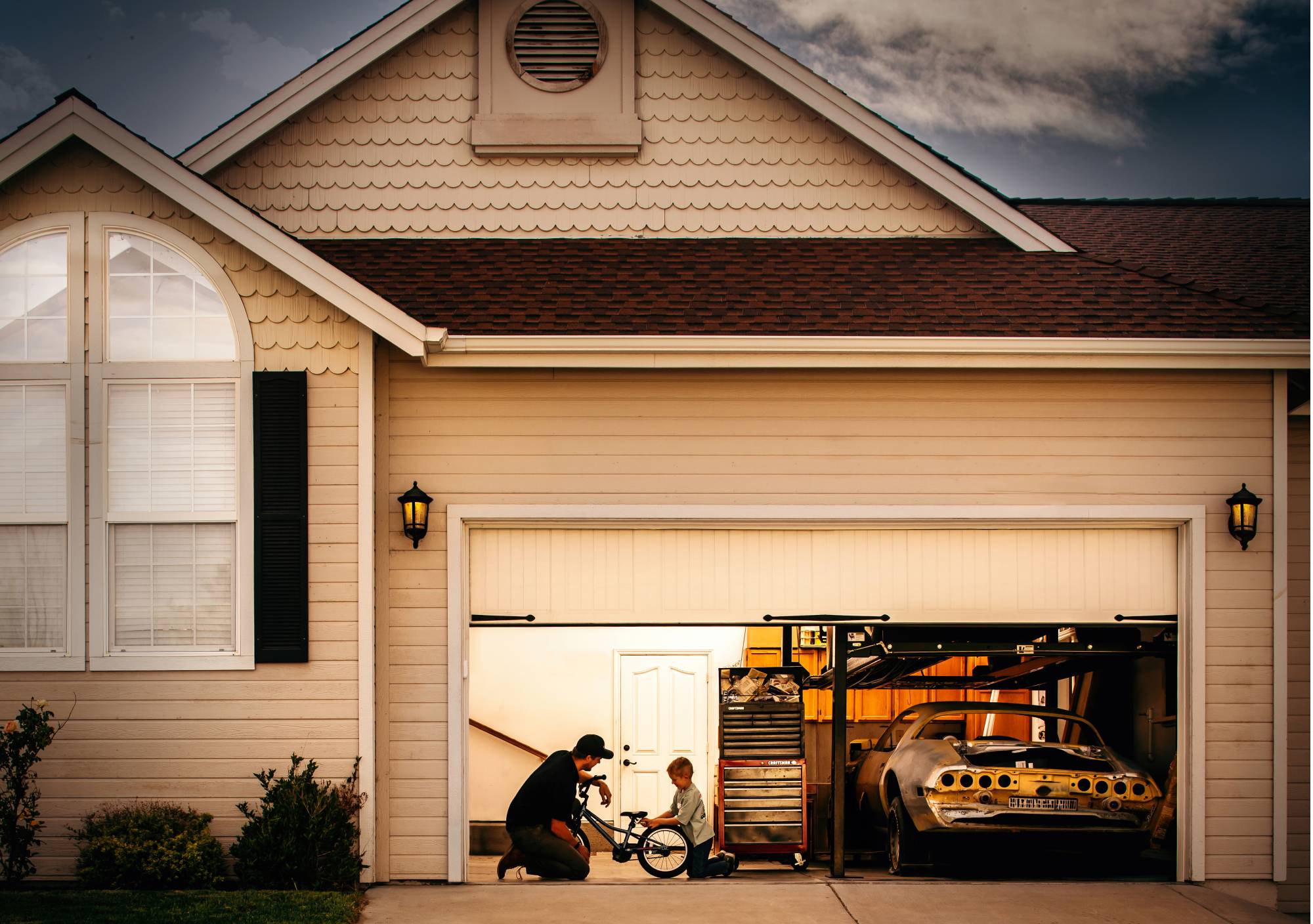
A garage door operates as a protective system with multiple safeguards working in the background. Photo-eye sensors, auto-reverse technology, and secure access controls are among the garage door safety features that keep family members, pets, and vehicles out of harm’s way.
Over time, though, wear and small misalignments can compromise how well these systems respond. A routine garage door inspection helps confirm that these systems respond correctly before a small problem turns into a dangerous situation.
The sections ahead walk through the safety features every homeowner should recognize and maintain.
Why Garage Door Safety Features Matter
A properly operating garage door should move predictably, stop when something crosses its path, and stay securely in position when closed. Learning a few basic garage door safety tips can help homeowners recognize warning signs before the door becomes unreliable.
Protecting Your Family
A garage door is heavy enough to cause serious injuries when safety systems fail. Auto-reverse technology and sensors help protect children, pets, and anyone passing through the opening while the door is moving.
Preventing Property Damage
Functioning sensors prevent your door from lowering onto a parked vehicle, bicycle, or storage items. They also reduce the odds of sudden failures that could damage the door itself.
Extending Garage Door Lifespan
Catching worn parts early keeps little issues from snowballing into big ones. A few simple garage door safety tips go a long way toward easing wear and helping your system last.
Essential Garage Door Safety Features Every Homeowner Should Know
Modern garage doors rely on several systems working together. Knowing what they do makes it easier to spot problems and schedule service before normal operation becomes unsafe.
Auto-Reverse System
The garage door auto-reverse feature senses when something’s blocking the door’s path and immediately sends it back up. It’s been required on residential doors since the early 1990s, and it’s one of the most important safeguards you have.
Photo-Eye Safety Sensors
Garage door safety sensors sit near the bottom of the tracks and send an infrared beam across the opening. When something interrupts that beam, the door should stop closing and reverse. Dirt, poor alignment, damaged wiring, or blocked lenses can interfere with sensor performance.
Manual Emergency Release
The emergency release allows you to disconnect the opener and operate the door manually during a power outage or opener failure. Use it carefully, particularly if the door has a damaged spring or feels unusually heavy.
Rolling Code Technology
In 2024, 52% of all burglaries targeted residential properties. It’s a good reminder that home security starts with the entry points we use most.
Each time you press the remote, rolling code technology generates a brand-new access code, so would-be intruders can’t grab and reuse your signal. It adds another layer of protection to your garage door security features and one of your home’s largest entry points.
Motion Detection Lights
Opener lights with motion detection improve visibility when you enter a dark garage. Better lighting also helps you notice obstacles, open doors, or unexpected activity around the garage.
Book a Safety Check
How to Test Your Garage Door Safety Features
A quick monthly garage door inspection takes just a few minutes and tells you whether your safeguards are still doing their job.
Test the Auto-Reverse Function
Set the sturdy object, like a block of wood or a roll of paper towels, on the floor under the middle of the door. Close it with your remote and watch to see if it reverses the second it touches the object. If it keeps going down, it’s time to call in a professional.
Inspect the Photo-Eye Sensors
Make sure both garage door safety sensors are facing each other and sitting at the same height. Give the lenses a quick wipe to clear off any dust, then check the indicator lights. Steady lights mean you’re good; blinking lights usually point to a problem.
Test the Manual Release
Pull the release cord and lift the door by hand to see how smoothly it moves. Getting comfortable with this now means you won’t be caught off guard if the power goes out or an emergency comes up.
Common Safety Issues Homeowners Should Never Ignore
Unusual movement, new noises, and inconsistent operation rarely improve on their own. A professional inspection can determine whether the problem comes from the opener, tracks, springs, cables, or another part of the system.
Door Doesn’t Reverse
If your door won’t reverse when it hits something, faulty sensors or an aging opener are usually behind it. Since this knocks out a key safeguard, get a garage door inspection booked right away.
Broken Springs or Frayed Cables
Springs and cables are under a ton of tension. A snapped spring or fraying cable is genuinely dangerous, so leave it to a professional. This is not a DIY situation.
Misaligned Tracks
Bent or misaligned tracks can cause jerky, uneven movement and place additional strain on rollers and other parts. Left unresolved, track problems may lead to more extensive garage door repair.
Damaged Rollers and Hinges
Grinding or rattling sounds are usually your rollers and hinges asking for attention. Ignore them, and you’ll see the door run less efficiently and eventually face a pricier fix.
Upgrade Your Safety Features
Garage Door Safety Tips for Every Homeowner
A few simple routines keep your door dependable and lower the odds of an accident. None of these garage door safety tips takes much effort.
Schedule Annual Garage Door Inspections
Regular inspections allow technicians to check balance, spring tension, cables, rollers, tracks, opener settings, and safety systems. Preventive garage door maintenance may also reduce the chance of unexpected breakdowns.
Keep Safety Sensors Clean
Wipe your sensors down now and then to clear away dust and cobwebs. Also, double-check that nothing’s blocking the beam, so the door responds every time.
Never Attempt Spring Repairs Yourself
Garage door springs store significant energy and can cause serious injuries if released incorrectly. Spring replacement is a job for trained technicians with the correct tools and repair procedures.
Teach Children Garage Door Safety
Keep remotes and wall controls away from young children. Teach them never to race beneath a closing door, hang from door sections, or play near moving components.
Why Professional Garage Door Inspections Are Important
A garage door has more going on than what you can see from the driveway. Professional service can uncover wear in parts that may still appear functional during everyday use.
Comprehensive Safety Checks
During a full garage door inspection, a technician looks over the springs, rollers, tracks, cables, and opener to confirm everything’s operating safely.
Identify Hidden Problems Early
An experienced eye picks up on subtle wear and mechanical fatigue well before anything breaks, which extends the life of your system and spares you those out-of-nowhere breakdowns.
Maintain Safe Operation Year-Round
Seasonal tune-ups and steady garage door maintenance in Reno keep your door running smoothly through temperature swings and heavy day-to-day use.
For inspections, repairs, upgrades, and garage doors sale, repair & services in Reno, Thompson Garage Doors can evaluate the full system and recommend the right next step.
Schedule a Safety Inspection
Frequently Asked Questions
Can I replace garage door safety sensors myself?
Sensor replacement requires proper wiring, positioning, and alignment with the garage door opener. While some homeowners may be comfortable with the job, professional installation can confirm that both sensors communicate correctly and that the door stops and reverses properly when the beam is interrupted.
Why won’t my garage door reverse?
Dirty or misaligned sensors, damaged wiring, incorrect opener settings, or mechanical problems can prevent a garage door from reversing properly. Clean and check the sensors first. If the problem continues, stop using the automatic opener and schedule garage door repair to identify the source.
How do I test the auto-reverse feature?
Place a solid object, such as a piece of wood, flat beneath the garage door and close it using the opener. The garage door auto-reverse system should send the door upward after it touches the object. If it keeps pushing downward, schedule professional service.
How often should I schedule a garage door inspection?
Most homeowners should schedule a professional garage door inspection at least once a year. You may need service sooner if the door becomes noisy, moves unevenly, responds slowly, struggles to open or close, or develops problems with its sensors, springs, cables, or reversing system.
How do garage door safety sensors work?
Garage door safety sensors use an infrared beam that runs across the bottom of the garage door opening. If a person, pet, or object breaks the beam while the door is closing, the opener should stop the door and reverse it before contact.
What are the most important garage door safety features?
Key garage door safety features include photo-eye sensors, auto-reverse technology, a manual emergency release, rolling-code security, and reliable springs, cables, tracks, and controls. Together, these systems help prevent injuries, reduce property damage, and keep the door operating safely during daily use.
Final Thoughts
Your garage door safety features are there to protect the people, vehicles, and property you care about. But they only do their job when they’re maintained and tested. Regular garage door inspection, routine testing, and quick repairs keep your door running safely and lower the chances of an accident.
Want peace of mind that your garage door is operating safely? Thompson Garage Doors provides professional garage door inspections, maintenance, and repair services throughout Reno and Sparks.
Schedule a comprehensive safety inspection today and keep your garage door performing at its best.