

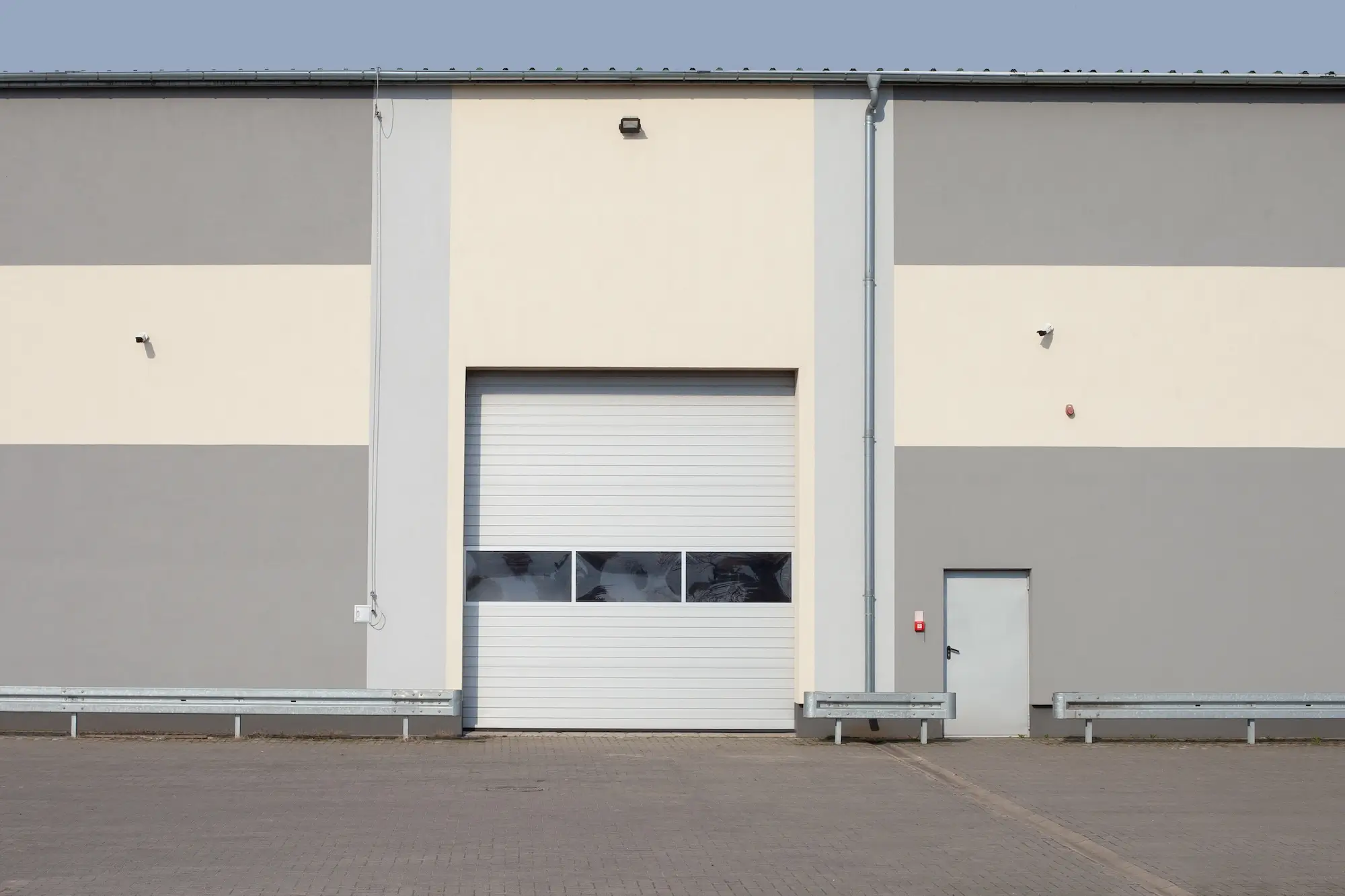
A man door is a pedestrian-sized entry door designed to let people enter or exit without having to operate a much larger overhead industrial or garage door. Also called a mandoor, it may be installed separately beside the larger door or incorporated into certain door systems as a walk-through entry.
In commercial facilities, Thompson commonly sees pedestrian doors used to reduce unnecessary operation of larger overhead doors. This can make everyday access more convenient while helping keep larger openings closed when they are not needed.
In this blog, we’ll explain what a man door is, explore common types and sizes, and cover how man doors are used in commercial and residential garage applications.
What Else Is a Man Door Called?
A man door may be described by several names depending on the manufacturer, industry, or door configuration. Common terms include:
- Personnel door
- Pedestrian door
- Pass-through door
- Walk-through door
- Wicket door
These terms can overlap; however, they do not always describe the exact same construction. For example, a personnel door installed beside an overhead door is a separate entry within the building wall. By comparison, a pedestrian door garage system may incorporate a walk-through opening directly into a larger door. You may also see terms such as walk-through garage door or garage walk-in door when describing pedestrian access associated with a garage. The specific terminology usually depends on how the door is built and where it is installed.
Request a Free Man Door Estimate
Types of Man Doors and Where They Are Installed
The right man door configuration depends on the building, opening, traffic needs, and larger door system involved.
Separate Exterior or Side-Entry Man Door
An exterior man door is installed in the building wall beside a garage or commercial overhead door. This creates an independent pedestrian entrance without changing how the larger door operates. It is common for garages, service areas, warehouses, and other buildings that need regular foot access.
Man Door Built Into a Larger Door
Some specialized systems can incorporate a pedestrian or wicket door directly into a larger overhead door. A man door in garage configuration like this can provide pedestrian access through the larger opening, but compatibility depends on the specific door system.
Commercial Man Doors
Commercial applications may use a steel man door with heavier-duty construction, security hardware, closers, and other components suited to frequent use. They can be available in different configurations based on the building type, traffic levels, security needs, and applicable code requirements.
Residential Garage Applications
A home may use a separate side-entry door as a garage man door, giving occupants another way into the garage. An integrated garage door with man door design is also possible with certain systems, although the available configurations depend on the design and manufacturer.
Since the front door is a common entry point during a home break-in, with 34% of burglars using it to enter, homeowners may also consider how each exterior entry point is secured.
Man Door Sizes, Materials and Hardware
There is no single size or specification that fits every man door for garage or commercial application. Door dimensions depend on the opening, building use, accessibility needs, and selected door system.
Here is a quick overview of common man door features and considerations:
| Features | Common Consideration |
| Width and height | Based on the opening, use, accessibility, and applicable codes |
| Material | Steel, fiberglass, or another suitable exterior-rated material |
| Insulation | Selected according to climate, building conditions, and energy needs |
| Vision panels | Used when visibility through the door is beneficial |
| Hardware | Locks, access control, closers, panic/exit hardware, and handles |
| Sealing | Weather seals and thresholds can help limit drafts and moisture |
A steel man door may be chosen for its durability and security, while fiberglass can be a suitable option for certain exterior applications. If thermal performance is a consideration, an insulated door may be preferable. The hardware should then complement the door’s intended use, taking into account factors such as access frequency and applicable code requirements.
Schedule a Man Door Consultation Now
Safety and Code Requirements for Man Doors
Safety and code requirements for a man door in a garage or commercial application depend on the project. Some of the factors can include residential or commercial use, occupancy type, whether the commercial man doors form part of an exit route, fire-separation requirements, required clear opening, door swing, accessibility, and local building and fire codes.
Panic or exit hardware may be required in some occupancies, while other applications may use standard locking hardware. Integrated pedestrian doors can also require safety measures that prevent the larger overhead door from operating while the pedestrian door is open.
Pro insight: The applicable requirements can vary by building and jurisdiction, so Thompson Garage Doors can help identify an appropriate door configuration. For existing commercial systems, a commercial door safety check can help identify conditions that may affect the door, while final code requirements should be confirmed for the specific project and local authority having jurisdiction.
Why Use a Man Door Instead of Opening the Garage Door?
A man door in a garage can make everyday pedestrian access simpler when a large overhead door is primarily intended for vehicles, equipment, or larger openings. It provides:
- Pedestrian access: People can enter and exit without operating a large overhead door.
- Reduced door cycling: Regular foot traffic can use the smaller door instead of repeatedly operating motors, tracks, springs, and other larger door components.
- Energy control: A smaller opening can reduce unnecessary conditioned-air exchange compared with opening the entire overhead door.
- Traffic and safety management: Separate pedestrian access can help distinguish foot traffic from vehicle or equipment movement where the building layout supports it.
These benefits can be useful in warehouses, service bays, manufacturing facilities, schools, other commercial buildings, and residential garages where people need regular pedestrian access. If a facility needs a larger opening for vehicles or equipment, our commercial garage doors can provide the access needed for those larger movements.
Talk to a Garage Door Specialist Today
Can You Add a Man Door to an Existing Garage?
Yes, adding a man door for garage access is possible in many existing garages, but the best option depends on the building structure and existing door system. A separate pedestrian door can be added to an adjacent wall, while a man door in a garage door requires an overhead-door system designed to accommodate an integrated entry.
Before adding a garage door with man door access, the project should be evaluated for the available opening, measurements, structural conditions, weather sealing, hardware, door compatibility, and applicable codes. The existing garage-door construction can also affect which configurations are suitable.
Pro tip: If you are considering this type of installation, Thompson Garage Doors’ guide on how to install a man door in a garage provides a closer look at the process and key considerations.
Frequently Asked Questions
Can a garage door have a man door built into it?
Yes, some compatible commercial and specialty systems support an integrated garage door with man door. However, not every garage door can be safely modified to add a man door in a garage door. Compatibility, construction, hardware, and safety requirements need to be reviewed first.
Is a walk-through garage door the same as a man door?
A walk-through garage door can refer to a larger door system with an integrated pedestrian opening. A garage walk-in door may also refer to pedestrian access associated with a garage. A separate side-entry door is different from an integrated walk-through configuration.
What is the difference between a personnel door and a man door?
Personnel door and man door can describe doors intended for pedestrian access, but usage varies by industry and manufacturer. A pedestrian door garage system may be a separate door or part of a larger door assembly.
Can residential garage doors have man doors?
Yes, a residential garage door with man door access is possible with certain systems. A separate man door for garage access is also common. Integrated designs depend on the garage-door system, available configuration, and project requirements.
What material is best for a commercial man door?
A steel man door is a common choice for commercial applications where durability and security are priorities. Fiberglass and other materials may suit specific environments. The right exterior man door material depends on exposure, insulation needs, security requirements, and intended use.
Get the Right Man Door for Your Building
Choosing the right man door depends on the building, opening, intended use, and existing door system. This is where Thompson Garage Doors can help determine the appropriate type, size, materials, hardware, and man door for garage compatibility, along with installation requirements.
Explore commercial man doors and request a consultation or quote for your project.