

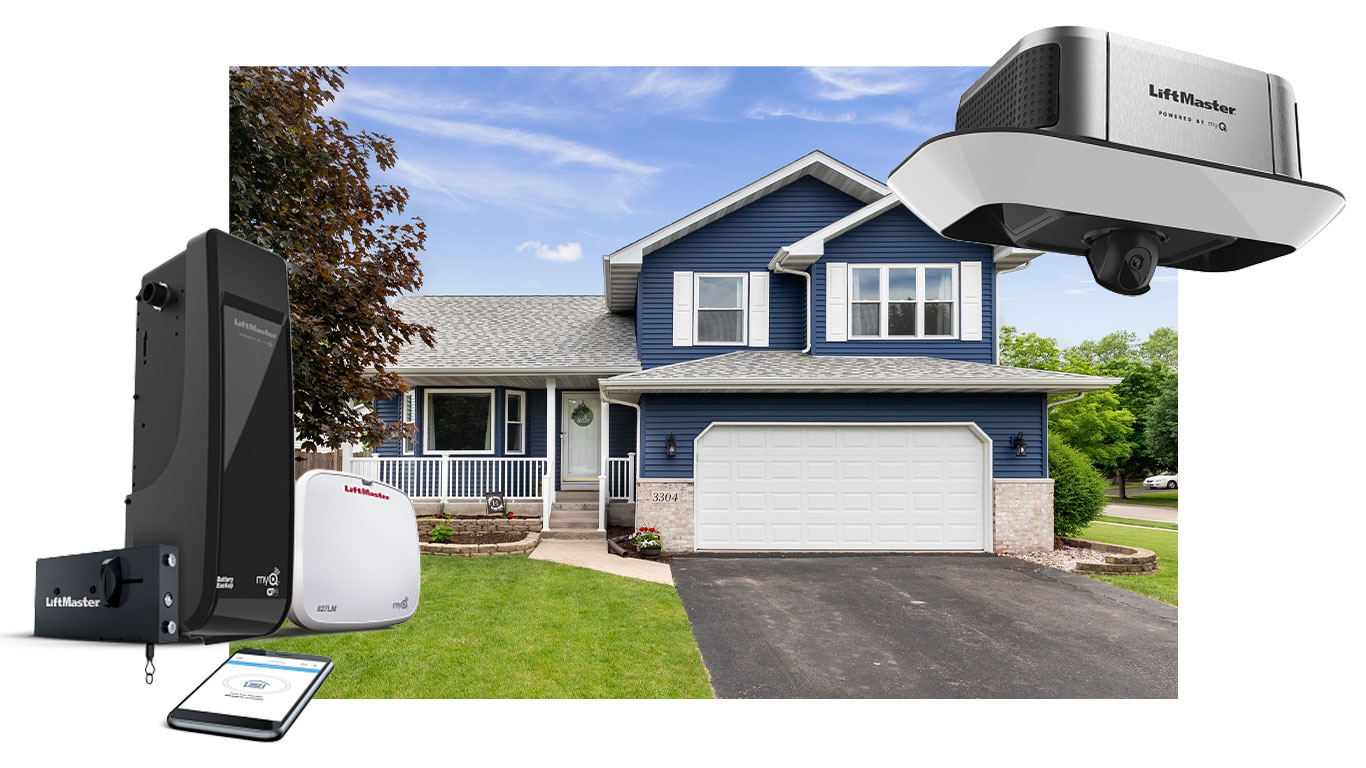
Wall-mount garage door openers and traditional overhead garage door opener systems operate differently. The mounting location affects door movement, vertical clearance, and vibration. Many homeowners compare side-mount and overhead options when upgrading their garage.
When reviewing wall-mount versus ceiling-mount garage door opener setups, layout and budget usually drive the decision. Others focus on noise level, overhead storage, and maintenance. This guide explains the differences between a side-mount and an overhead opener to help you make an informed decision.
What we’ll cover:
- How wall-mount garage door openers work
- What is an overhead garage door, and how it operates
- Wall-mount garage door opener vs ceiling mount differences
- Installation and cost considerations
What Is a Wall-Mount Garage Door Opener?
Wall-mount garage door openers are installed beside the garage door rather than on the ceiling. These models operate from the wall near the door’s torsion bar. They eliminate the need for a rail system across the garage’s ceiling.
Unlike traditional systems, a wall-mount opener connects directly to the door’s torsion bar. The motor rotates the torsion shaft to lift the door’s weight. This setup improves space efficiency and preserves overhead space.
How Wall-Mounted Garage Door Openers Work
A wall-mounted garage door opener is installed beside the door, near the torsion spring system. The opener connects directly to the torsion bar and rotates it to raise and lower the door. No chain drive or belt drive runs across the ceiling.
Because the drive mounts to the wall, the load is transmitted directly through the torsion shaft. Jackshaft garage door openers use this configuration for smoother operation. Improper spring tension is one of the most common causes of premature opener failure during service calls.
Key Benefits of Wall-Mount Garage Door Openers
Wall-mount systems free ceiling space for storage racks or LED lighting. They work well in garages with high or low ceilings, or in low-ceiling spaces that limit rail clearance. Many homeowners prefer this layout for better aesthetic appeal.
These units typically produce less vibration than overhead openers. Quiet operation improves comfort in attached garages. Newer models may include battery backup and smart home integration features. Many wall-mount systems use DC motors, which support quieter operation and smoother starts.
Find the Right Garage Door Opener
What Is an Overhead (Ceiling-Mounted) Garage Door Opener?
An overhead garage door opener mounts to the ceiling above the center of the door. Ceiling-mounted openers connect to a track that runs along the garage’s ceiling. Many homeowners refer to this design when asked about overhead garage door systems.
The motor drives a chain, belt, or screw drive mechanism. The trolley pulls the door along the track to open and close. This style remains common in standard garages.
How Overhead Garage Door Openers Work
An overhead opener attaches to ceiling supports. The motor turns a drive system that moves a trolley along a metal track. That trolley pulls the door upward and guides it back down.
The system depends on correctly tensioned springs to reduce strain on heavier doors. Movement transfers through the track rather than the torsion bar. Vibration may travel through the ceiling framing during operation.
Advantages of Overhead Garage Door Openers
Overhead garage door openers typically carry a lower initial cost than wall-mount units. They work with most residential and heavy-duty garage doors within weight-limited guidelines. Replacement parts remain widely available.
Many homeowners choose this configuration because it is typically installed in standard garages. Ceiling-mounted openers support cost-effective upgrades. Long-term maintenance remains straightforward.
Wall-Mount Garage Door Opener vs Ceiling Mount: Key Differences
Choosing between a wall-mount garage door opener and a ceiling-mount system depends on the garage layout and overhead space. The comparison between a side-mount and overhead garage door opener setup affects space efficiency, vibration, and installation.
These differences help clarify which ideal opener is best for your home.
| Feature | Wall-Mount Opener | Overhead (Ceiling-Mounted) Opener |
| Installation Location | Mounted beside the door | Mounted to the ceiling with a track |
| Space Requirements | Free overhead storage | Requires ceiling clearance |
| Drive Mechanism | Direct torsion shaft drive | Chain, belt, or screw drive |
| Noise & Vibration | Reduced ceiling vibration | Vibration may transfer overhead |
| Installation Complexity | Requires a torsion spring system | Works with most door systems |
| Maintenance | Fewer moving components | Track and drive upkeep |
Wall-mount systems preserve ceiling space and overhead storage. Ceiling-mounted openers cost less upfront and fit most layouts. Maintenance needs vary by drive type and the door’s weight.
Start Your Garage Opener Upgrade Today
Installation Considerations: What Homeowners Should Know
Installation varies by opener type and door configuration. Homeowners researching how to install wall-mount garage door opener systems should first confirm torsion spring compatibility and wall clearance. Structural support and proper functionality affect long-term performance.
Understanding how to install a wall-mounted garage door opener also means reviewing electrical access and mounting height. Overhead systems require secure ceiling framing and track alignment. Professional installation reduces strain and improper balance.
Installing a Wall-Mounted Garage Door Opener
A wall-mounted opener is attached beside the door, near the torsion bar. The system requires a properly balanced torsion spring before installation. Adequate wall clearance and access are necessary.
Direct connection to the torsion shaft eliminates the need for a ceiling rail. Jackshaft openers provide smooth operation for high-lift doors. Professional installation supports reliable performance.
Installing an Overhead Garage Door Opener
An overhead garage door opener mounts to the ceiling joists using support brackets. The rail system connects to the door and guides movement along a track. Proper alignment prevents uneven operation.
Heavier doors require correct spring calibration to prevent excess strain on the opener. Torsion spring systems store significant tension and require proper handling during setup.These systems work with most residential garage doors. Some experienced homeowners install them, though heavy doors may require assistance. Secure mounting and spring balance remain essential.
Which Garage Door Opener Is Best for Your Home?
A suitable configuration for your garage door in Reno depends on layout, ceiling space, and daily use. Wall-mount garage door openers free up overhead space and improve space efficiency. A traditional overhead garage door opener is suitable for standard garages and offers a lower initial cost.
According to the 2025 Cost vs. Value Report, garage door replacement delivers a 267.7% return on investment at resale. This single investment is one of the top-performing home improvement projects nationwide.
Learn Which Garage Opener Fits Your Needs
FAQs: Wall Mount and Overhead Garage Door Openers
How long does installation typically take?
Installation time varies by door type and access to the electrical supply. Most openers are installed within a few hours. Complex setups may require additional adjustment.
Which option is quieter: side mount or overhead?
A side-mount configuration typically produces lower noise than overhead openers. Direct torsion drive reduces vibration across the garage’s ceiling. Motor type also affects smooth operation.
Can any garage door use a wall-mounted garage door opener?
Not every door supports wall-mounted openers. The system requires a balanced torsion spring and adequate wall clearance. Heavy garage doors may require additional support.
Are wall-mount garage door openers more expensive than overhead models?
Wall-mount systems are typically more expensive upfront than the cost of an overhead garage door opener. Installation may require a torsion spring system and professional installation. Long-term value depends on space efficiency and performance.
Get Expert Help Choosing the Right Opener
Choosing between wall-mounted and ceiling-mounted garage door openers affects daily performance. The decision between a garage door opener side-mount and an overhead setup should reflect the layout and budget. The right opener protects your investment.
At Thompson Garage Doors, we evaluate garage layout and torsion systems before recommending a solution. Our team installs and services both wall-mounted and overhead openers with precision. Homeowners in the Reno area seeking garage doors rely on our experience for reliable upgrades.
If you are considering wall-mounted garage door openers versus a ceiling-mounted system, we are ready to help. We handle installation, replacement, and garage door repair in Reno, NV, with care. Contact Thompson Garage Doors today and choose the opener that fits your home.